Understanding Multi-Function School Activity Buses (MFSABs): What Administrators Need to Know
When it comes to student transportation, administrators are constantly balancing safety, compliance, and cost. One vehicle option that often raises questions is the Multi-Function School Activity Bus (MFSAB).
At Capital Lease Group, we work with schools and organizations across New England and the U.S. who rely on accessible and compliant vehicles. This post explains what makes an MFSAB different from a traditional school bus, why it exists, and what you need to know before putting one into service.
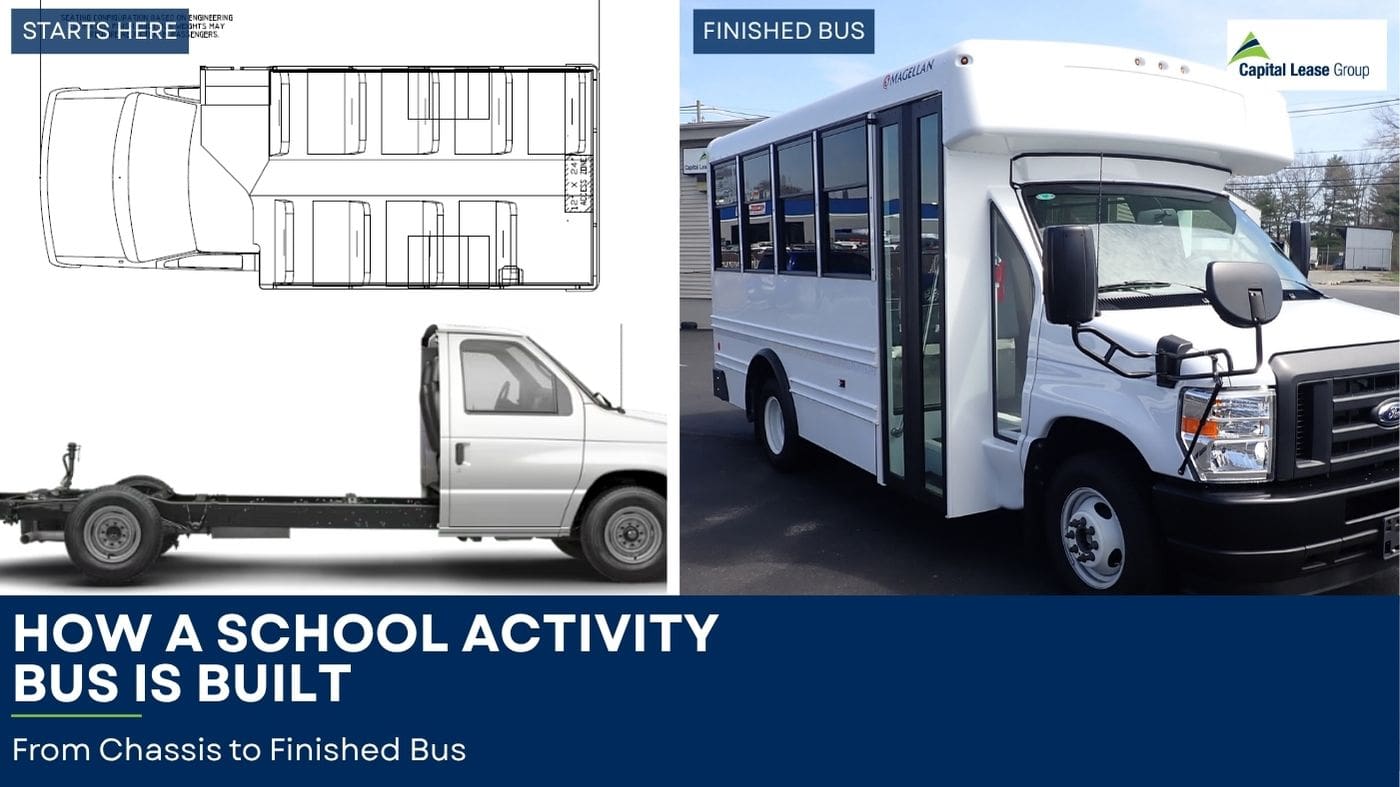
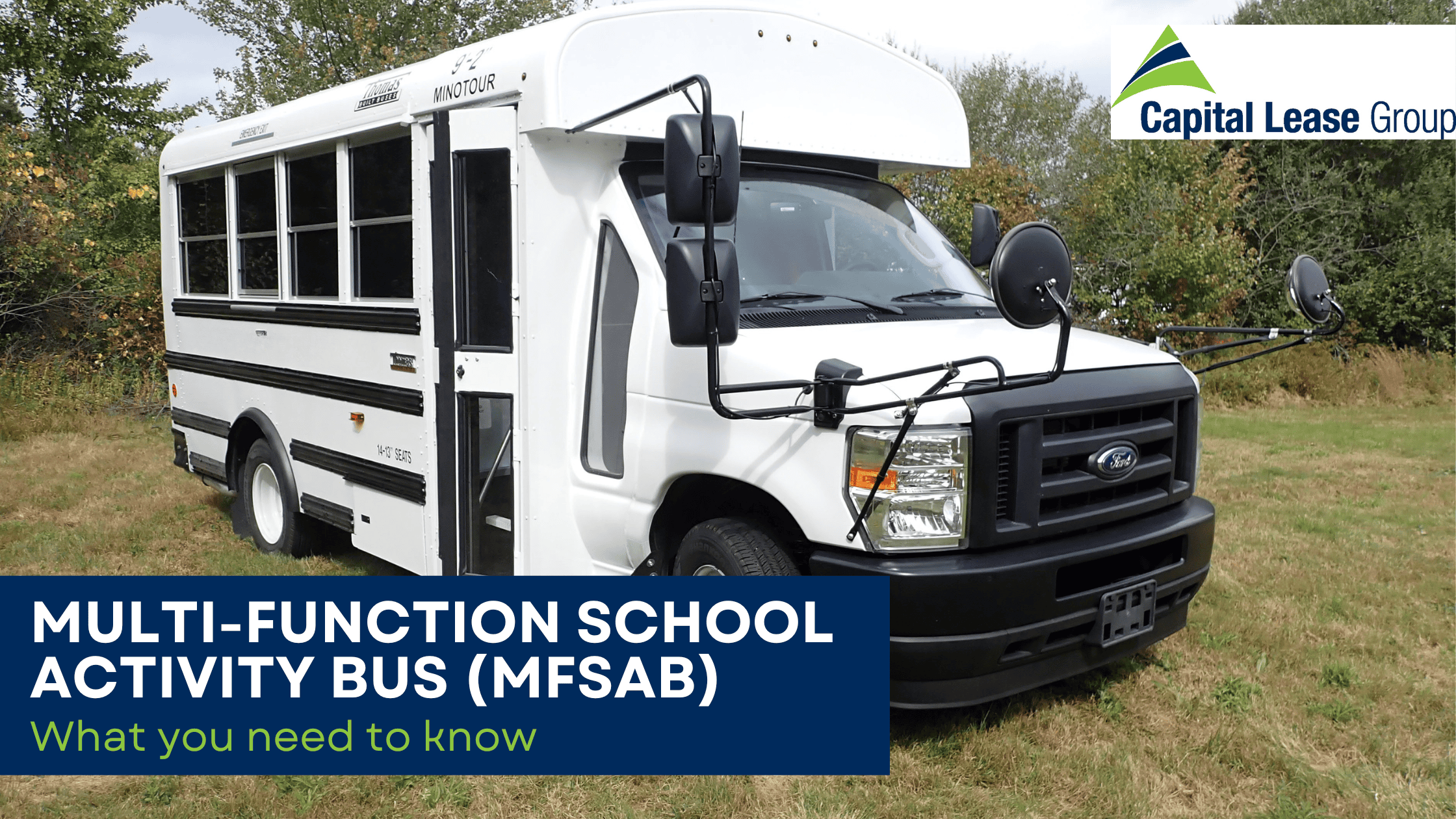
The photo above, and the other photos in this blog post, are all from a new Multi-Function School Active Bus that Capital Lease Group provided to a customer recently.
MFSABs are Built for Safety
MFSABs are designed with the same reinforced safety features as a full-size yellow school bus:
- Compartmentalized seating with energy-absorbing seat backs.
- Crash-tested roof strength and rollover protection.
- Fuel system integrity to minimize fire risk after a collision.
The main differences? MFSABs are not painted yellow and do not have stop arms or flashing red lights. Because they aren’t intended to load/ unload students on public roadways, they don’t need traffic control features.
When You Can Use an MFSAB
MFSABs are designed for school-related activities, not daily routes.
Approved uses include:
- Field trips
- Athletic events
- Extracurricular and after-school programs
They are not approved for:
- Fixed-route service between home and school
- Neighborhood bus stop pick-ups and drop-offs
This distinction is important: the absence of stop arms and flashing lights means these buses are only legal and safe in controlled loading/unloading environments.
Meeting Safety Standards
Administrators can assure families that MFSABs are just as safe in a crash as a school bus.
- They meet nearly all Federal Motor Vehicle Safety Standards (FMVSS) required for school buses.
- The exceptions are the traffic-control devices (lights and stop arms) that aren’t necessary for activity trips.
This makes MFSABs a safer and more compliant option than standard 12- or 15-passenger vans or shuttle buses, which do not meet federal crash standards for student transport.
Who Can Drive an MFSAB?
One of the most common questions is about driver licensing. The answer depends on where you are and the size of the bus.
- In Massachusetts: A driver can operate an MFSAB with a standard Class D license, as long as they complete any required school or district training (safety videos, behind-the-wheel practice, background checks, and medical clearance).
- Across the U.S.:
- A Commercial Driver’s License (CDL) with a passenger endorsement is required if the bus seats 15 or more passengers or exceeds certain weight limits.
- Some states (like Vermont) issue an MFSAB-specific endorsement.
- Others (like South Carolina) require a School Bus Driver’s Certificate for anyone transporting public school students.
Takeaway: Always check your state DMV regulations, but for most smaller-capacity MFSABs, a standard license with training is sufficient.
Why Districts Choose MFSABs
So why should administrators consider adding MFSABs to their fleets?
- Student Safety: Built to school bus standards, unlike passenger vans.
- Flexibility: A cost-effective option for small groups traveling to activities.
- Compliance: Keeps districts aligned with federal and state regulations.
- Right-Sizing the Fleet: Avoids running large buses for small extracurricular trips.
Final Thoughts
An MFSAB is a smart solution for schools that need safe, compliant transportation outside of daily routes. While they look a little different from traditional school buses, they offer the same level of crash protection and are designed specifically for activity-based student travel.
At CLG, we help districts and organizations across New England build and manage fleets that are safe, compliant, and cost-effective. If you’re considering MFSABs for your school, we’d be happy to walk you through the options and requirements in your state. Contact us for help!
For further reading, check out the official Federal Register definition of MFSAB and NHTSA school bus safety FAQs.


Frequently Asked Questions
What exactly is an activity bus? An activity bus — officially called a Multi-Function School Activity Bus or MFSAB — is basically a bus built with the same safety features as a yellow school bus, just without the stop arms and flashing red lights. Think of it as a school bus designed specifically for trips and events rather than the daily morning and afternoon routes.
How is an activity bus different from a regular school bus? The biggest differences are that activity buses aren’t painted yellow and don’t have the stop arms or flashing lights you see on route buses. That’s because they’re not meant to pick kids up on the side of the road — they load and unload in controlled areas like school parking lots or event venues.
What kinds of trips can you use an activity bus for? They’re made for things like field trips, sporting events, and after-school programs. What you can’t do is use them for everyday home-to-school routes or neighborhood bus stop pick-ups.
Are activity buses actually safe? Absolutely. They meet nearly all the same federal crash safety standards as a full-size yellow school bus — reinforced seating, rollover protection, fuel system safety, all of it. They’re a much safer choice than using a 12- or 15-passenger van, which doesn’t come close to meeting those standards.
Do you need a special license to drive one? That depends on where you are and how big the bus is. In Massachusetts, for example, a regular Class D license will do as long as the driver goes through the required training, background check, and medical clearance. In other states, you may need a CDL with a passenger endorsement if the bus seats 15 or more. A few states have their own specific endorsements. The safest bet is always to check with your state’s DMV.
Why are schools choosing activity buses over full-size buses or passenger vans? They’re kind of the best of both worlds. You get real school-bus-level safety without having to send a full-size bus on a trip for just a handful of students. They’re more cost-effective for small group outings, and they keep your district on the right side of federal and state safety rules — something passenger vans just can’t do.
Can you use an activity bus for regular bus stop pick-ups? No. Since they don’t have stop arms or flashing red lights, they’re not built or legally allowed for loading and unloading students on public roads. They should only be used in settings where you have a controlled loading area.
How do I get an activity bus for my school or district? Capital Lease Group works with schools and organizations across New England and the rest of the country to set up safe, compliant fleets — activity buses included. Their team can walk you through what’s required in your state and help you find the right fit.