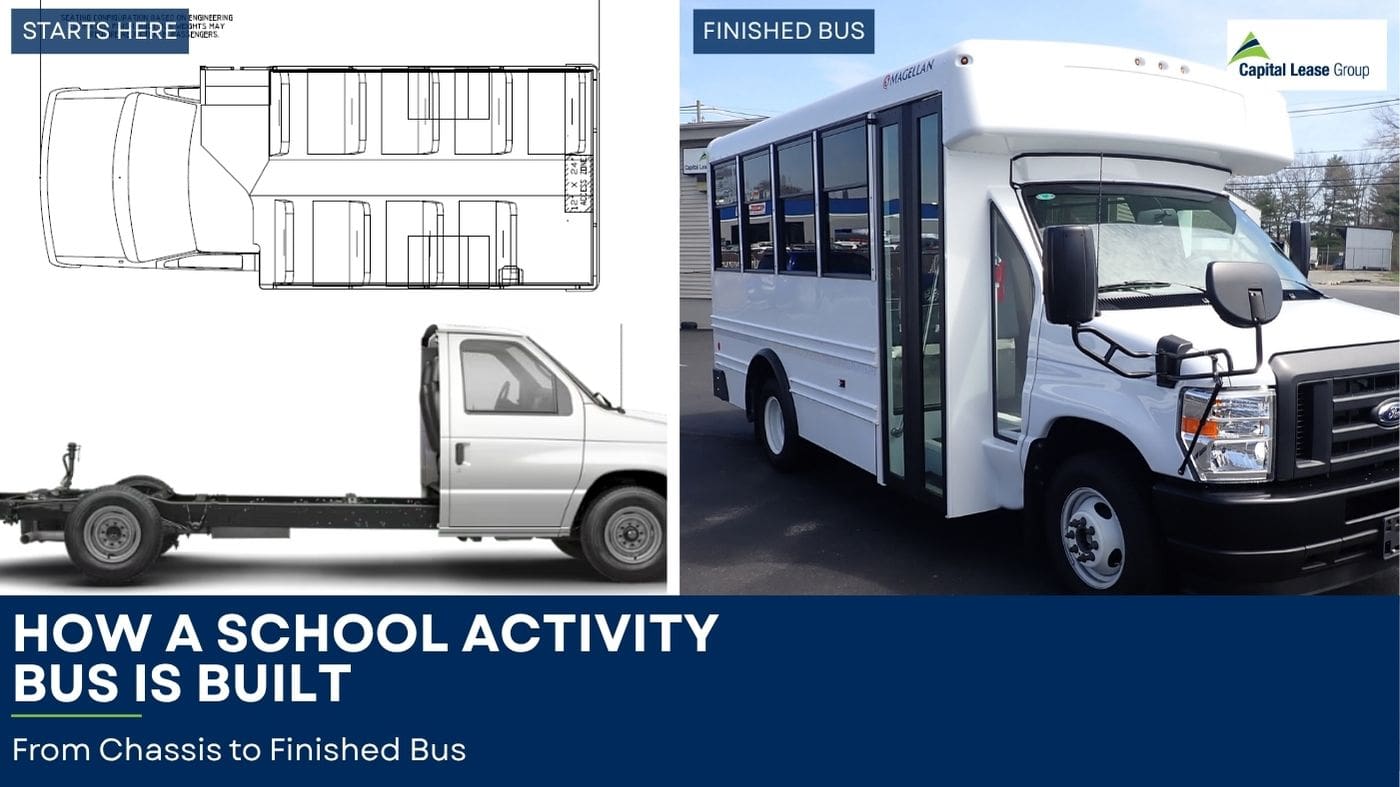
How a School Activity Bus (MFSAB) Is Built
From bare cutaway chassis to a federally certified bus — the five-stage build process, the safety standards behind it, and what every school and fleet buyer should know before they order.
Ever wonder why ordering a school activity bus can take months instead of weeks or days? The answer is in how it’s built.
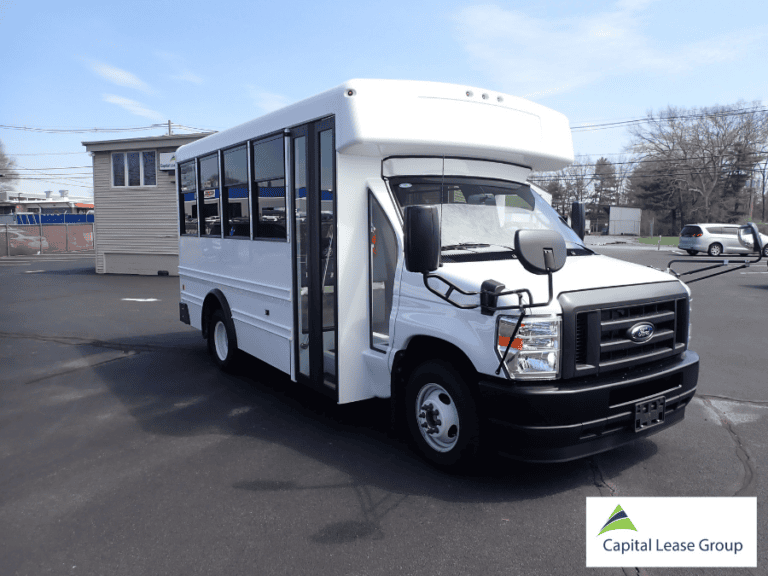
A school activity bus looks almost exactly like a school bus — same reinforced body, same high seat backs — but skips the flashing red lights and the fold-out stop arm. Most MFSABs are coach-built vehicles.
They start life as a commercial cutaway chassis, such as a Ford E-350/E-450, and are then custom-assembled by a certified bus body manufacturer to meet the federal school bus safety standards (FMVSS). Unlike a mass-produced passenger van, a school activity bus is essentially built to order, one spec sheet at a time.
Here’s how that process actually works, stage by stage — and why each step matters for the schools and fleets who’ll ultimately put these buses into service.
What Is an MFSAB?
NHTSA defines a Multi-Function School Activity Bus as “a school bus whose purposes do not include transporting students to and from home or school bus stops.”
In plain terms: an MFSAB must meet every federal school bus safety standard except the ones that require flashing warning lights and a stop arm. It’s built to school-bus crash and structural specs, but it’s meant for activity trips, athletics, field trips, and route work that doesn’t involve neighborhood pickups.
Step 1 — Selecting the Chassis
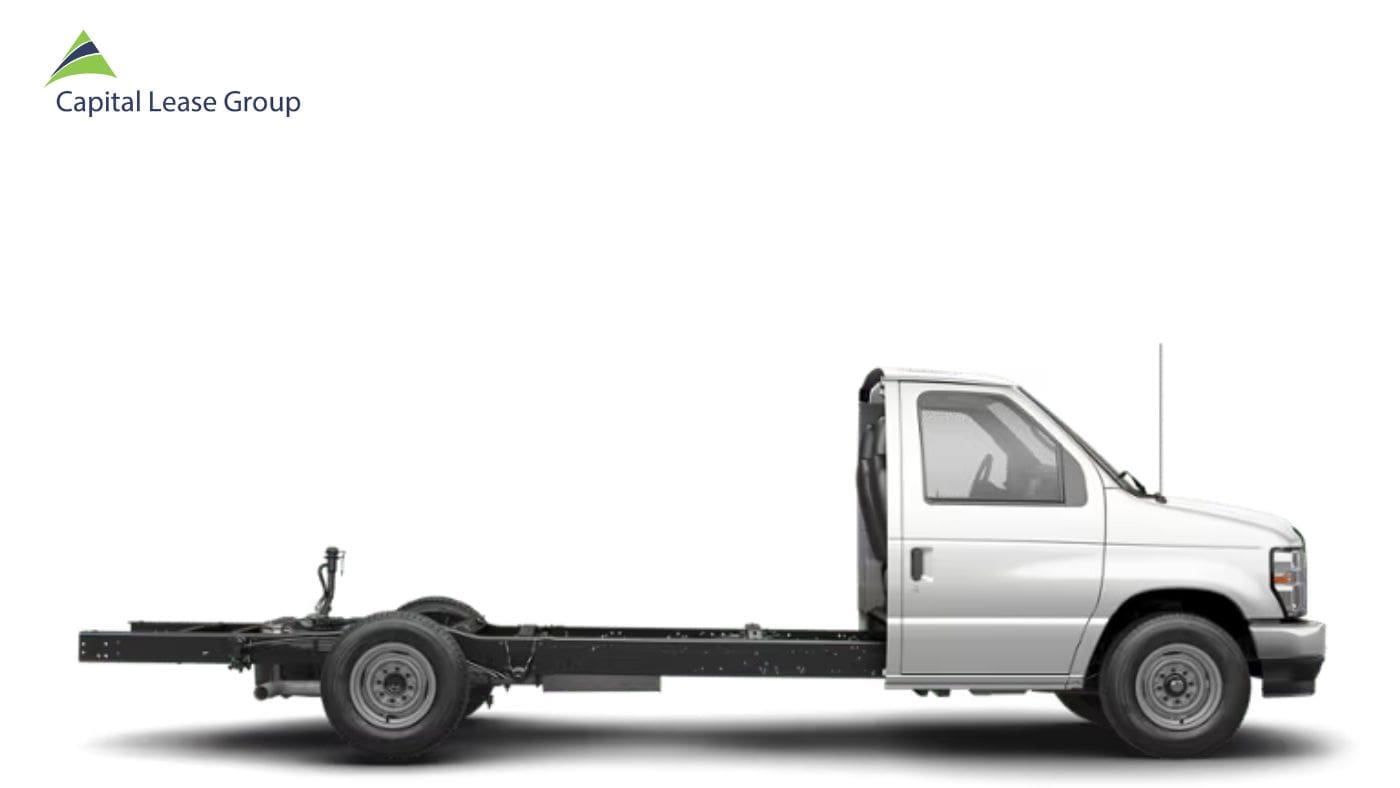
Every activity bus starts with a “base”: a cutaway van or truck chassis supplied by a major OEM such as Ford, GM, or RAM. These arrive from the factory with the engine, transmission, frame, wheels, and front cab section — the driver’s area — already assembled.
From there, the chassis is delivered to a bus body builder such as Collins, Micro Bird, Starcraft, Trans Tech, or Thomas Built Buses.
Common cutaway chassis include:
Ford E-350 / E-450 Super Duty
- Chevrolet Express 3500 / 4500 (and the GMC Savana equivalent)
- Ford Transit 350 / 350 HD
- RAM ProMaster 3500
The chassis choice drives much of the finished vehicle’s size, passenger capacity, and gross vehicle weight rating (GVWR) — which in turn shape everything from license requirements to whether the bus can accommodate a wheelchair lift. Get this decision right and the rest of the build follows naturally.
Step 2 — Building and Mounting the Bus Body
Once the chassis arrives, the body builder constructs and mounts the bus body — and this is where an activity bus becomes far more than a van with extra seats.
<
- >
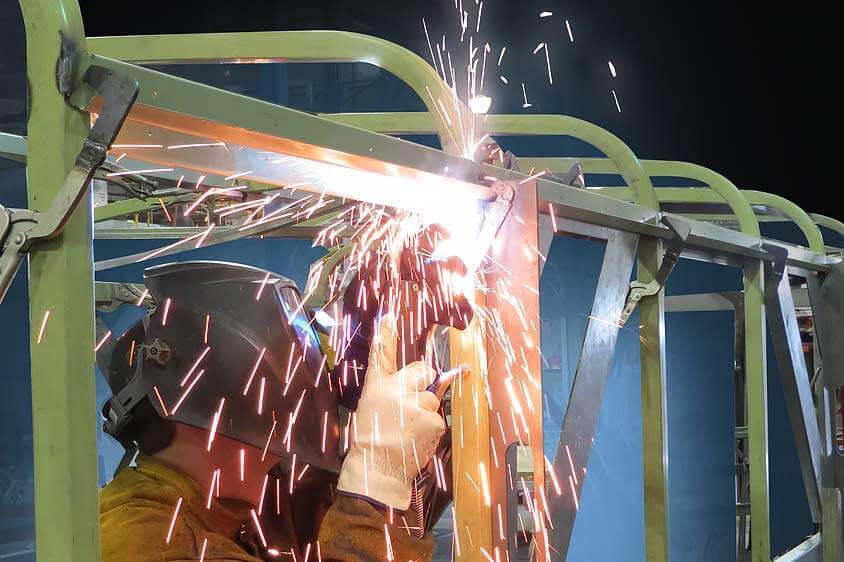
- The body is framed in reinforced steel or aluminum with welded cage structures engineered to meet federal school bus standards FMVSS 220 (roof strength) and FMVSS 221 (body joint strength).
- Exterior panels and interior wall materials are selected for impact resistance, corrosion control, and noise reduction.
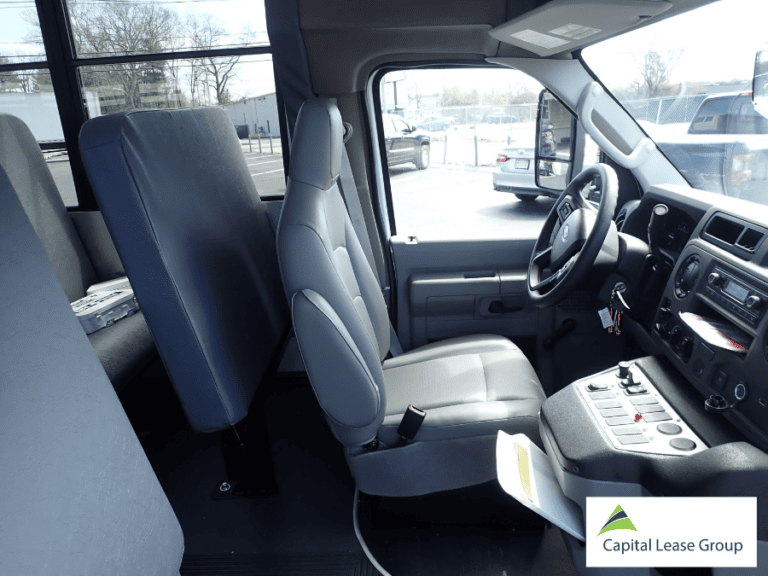
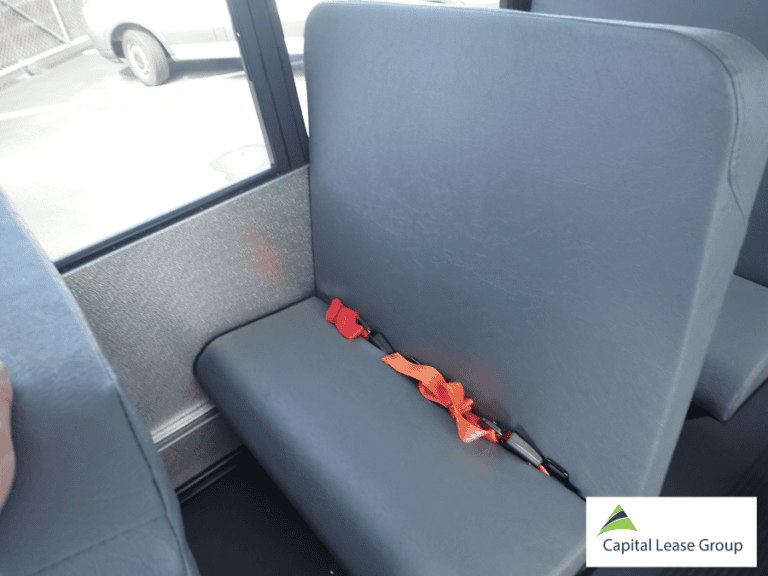
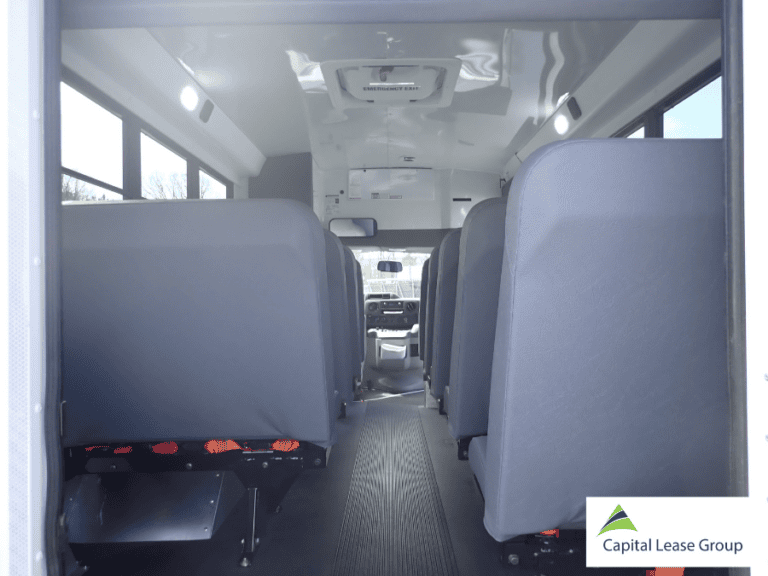
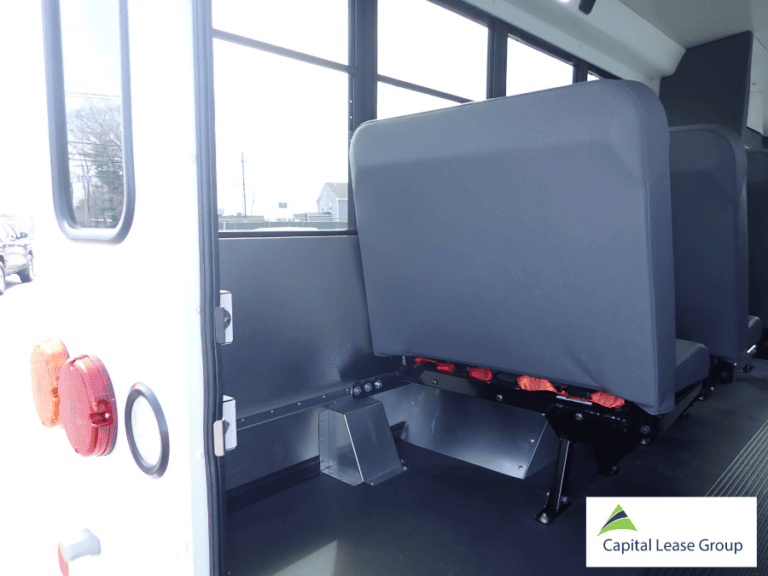
- Passenger seats are installed using compartmentalization — FMVSS 222 — with energy-absorbing, high seat backs and securely anchored frames that protect occupants without requiring belts on every seat.
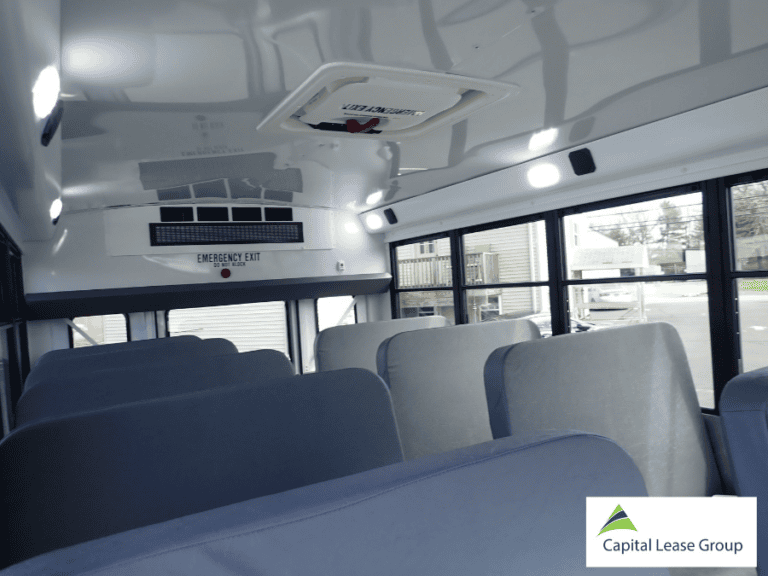
- Electrical systems, interior lighting, and HVAC are integrated at this stage.
By the end of this step the vehicle finally looks like a true bus — but it still has to be finished to the specific MFSAB configuration, which means no red flashing lights, no stop arm, and no “SCHOOL BUS” lettering.
Safety in Practice: Inside the Collins Magellan
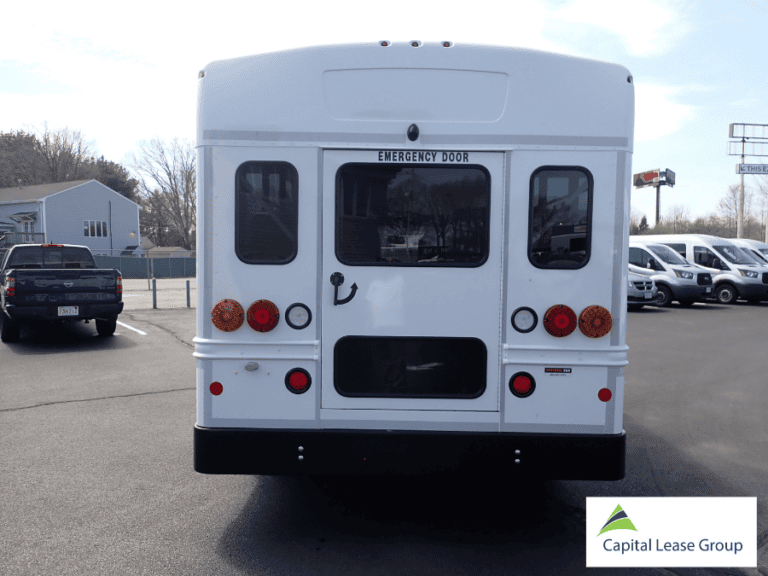
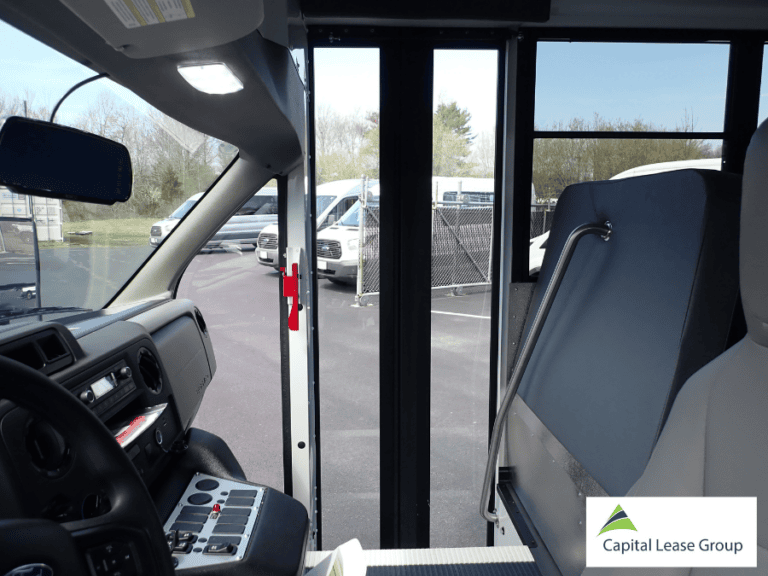
These standards aren’t abstract. Here’s how they show up in a real activity bus — the Collins Magellan, which is pictured in the photos below.
- Tubular roll-cage body. A one-piece tubular roof bow made from high-strength, low-alloy (HSLA) steel — rated 66% stronger than traditional steel — combines with full-length, interlocking cage stringers and floor beams to protect occupants in a rollover. This is the real-world expression of FMVSS 220 and 221. Watch an actual Magellan rollover test.
- Corrosion-resistant frame. A G90 galvanized steel frame is designed to resist rust and corrosion, protecting that cage structure over the bus’s service life.
- Compartmentalized, flexible seating. Configurations include bench seating, child restraints, 3-point belt systems, and Freedman activity seats, and elevated-floor models add structural integrity and improved compartmentalization (FMVSS 222).
- Marine-grade floor. A one-piece ½-inch marine-grade plywood floor, upgradable to ⅝-inch, creates a rigid, moisture-resistant platform underfoot.
- Safety glazing and visibility. AS3 tempered, 26%-tinted glass and water-shedding windows improve safety and temperature control, while Ford Transit models offer up to 810 square inches of driver visibility for greater awareness and control.
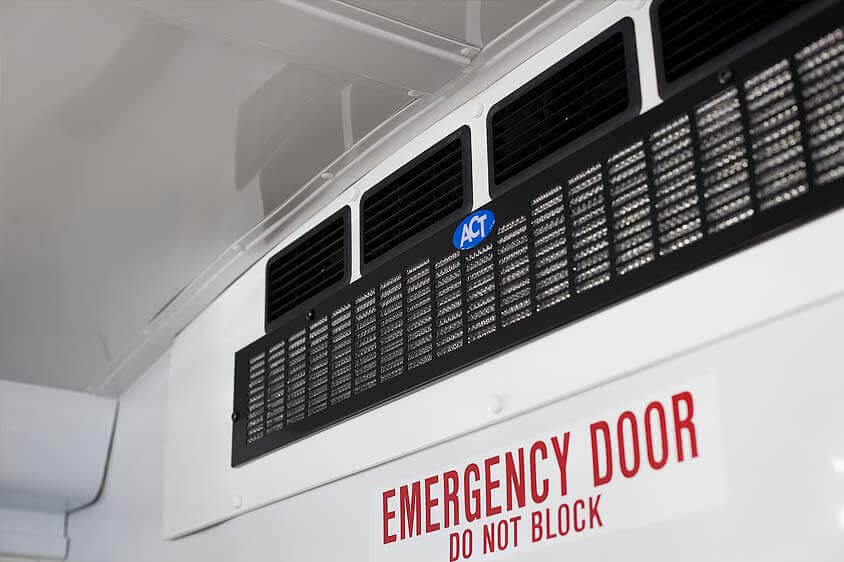
Feature details from Collins Bus. Specifications vary by model and configuration.
Step 3 — MFSAB-Specific Compliance and Certification
Next, the builder certifies the finished vehicle against the Federal Motor Vehicle Safety Standards that apply to school buses — with targeted exemptions for the traffic-control equipment covered by FMVSS 108 (warning lamps) and FMVSS 131 (stop arms).
In practice, that means an MFSAB:
- Meets all the same crash and structural standards as a full school bus;
- Does not include red warning lights or a stop arm;
- Is not painted National School Bus Yellow;
- Carries “MULTI-FUNCTION SCHOOL ACTIVITY BUS” labeling in line with NHTSA guidance.
Every completed vehicle receives a certification label and a VIN plate that formally identify it as an MFSAB — the paperwork that proves it was built to the standard, not merely styled to look the part.
Step 4 — Customization and Ordering
Because MFSABs are specialty vehicles, they’re typically built to order rather than pulled off a lot.
Customers can specify:
- Seating capacity, usually 9–30 passengers;
- Wheelchair lift and securement systems;
- Storage, air conditioning, and lighting packages;
- Interior finishes, flooring, and branding decals.
Manufacturers frequently work through dealers or fleet management partners — such as Capital Lease Group (CLG) — to manage the build, financing, delivery, and compliance documentation, so the buyer isn’t coordinating all of it alone.
Step 5 — Final Delivery and Inspection
Before an MFSAB carries its first passenger, it moves through a final round of checks:
- State inspection and registration (requirements vary by state);
- A dealer pre-delivery inspection (PDI) confirming safety systems and fit and finish;
- An end-user walkthrough for training and documentation before the bus goes into service.

What This Means for Fleet Buyers
For an administrator or fleet manager, understanding how an MFSAB is built isn’t trivia — it’s leverage.
Knowing the process helps you:
- Confirm you’re working with certified body builders that follow FMVSS school bus standards — not upfitters cutting corners;
- Plan around lead times, since build-to-order buses can take several months depending on chassis availability;
- Choose the right configuration for your needs across capacity, accessibility, climate, and budget;
- Avoid unsafe or non-compliant passenger-van conversions that don’t meet school bus safety standards.