
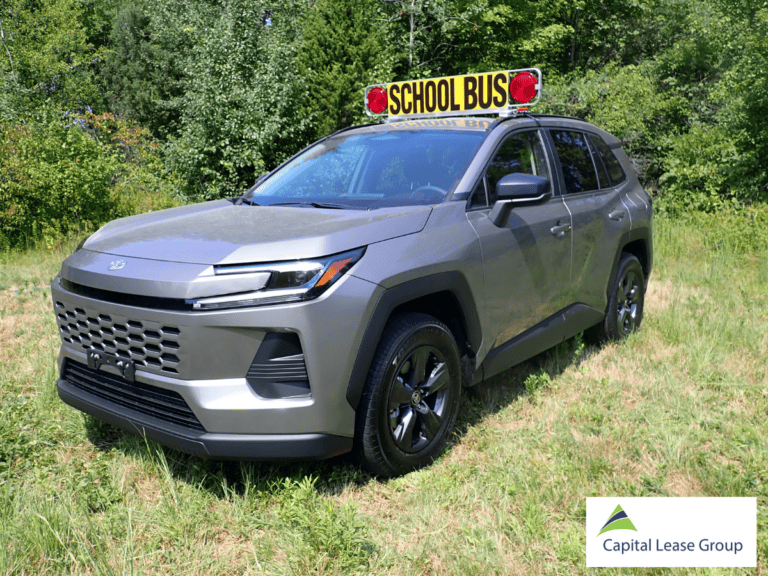
A 7D Vehicle Doesn’t Have to Be a Van: A Look at a Toyota RAV4 Built for Massachusetts Student Transportation
Capital Lease Group recently delivered a Toyota RAV4 LE equipped as a Massachusetts 7D vehicle — and it looks a little different from the RAV4s you normally see on Massachusetts roads.
Look up, and you’ll see why.
Mounted above the roof is a SCHOOL BUS sign with flashing lights — one of the most visible signs that this RAV4 has been equipped as a Massachusetts 7D school pupil transport vehicle.
But that is also what makes this particular vehicle interesting:
A 7D vehicle doesn’t have to be a van.
For schools and organizations transporting smaller numbers of students, a familiar passenger vehicle such as a Toyota RAV4 can provide a practical alternative while being properly equipped to meet Massachusetts 7D requirements.
What Is a Massachusetts 7D Vehicle?
The term “7D” comes from Massachusetts General Laws Chapter 90, Section 7D. It is a Massachusetts-specific category that allows school pupils to be transported in qualifying passenger vehicles rather than conventional school buses.
Massachusetts limits a 7D vehicle to no more than eight passengers in addition to the driver. If a monitor is riding in the vehicle, the monitor counts as one of those eight passengers. The vehicle must also have a gross vehicle weight rating of 10,000 pounds or less and meet the state’s requirements for school pupil transportation.
7D vehicles are particularly important for fixed-route student transportation. Massachusetts defines this to include regular transportation such as home-to-school and school-to-home trips, established bus-stop pickups and drop-offs, school-to-school transportation, and certain regularly scheduled after-school transportation.
That makes the 7D category particularly useful when an organization needs to move a relatively small number of students on a regular route but does not need a traditional full-size school bus.
A 7D Vehicle Can Be an SUV
When people hear “7D vehicle,” they often picture a passenger van or minivan.
This Toyota RAV4 shows another possibility.
Because a 7D vehicle is defined by Massachusetts requirements rather than simply by having a particular van body style, an appropriately configured passenger SUV can be used for this type of transportation.
For the organization receiving this RAV4, that means drivers get a vehicle that feels much like something they may already drive every day.
The RAV4’s smaller footprint can make it easier to maneuver through school parking lots, residential streets and busy pickup areas. It also offers the everyday driving characteristics of a passenger SUV rather than asking a driver to move immediately into a larger bus-style vehicle.
For programs transporting only a few students at a time, that can be a significant advantage.
What Was Added to This Toyota RAV4?
Turning a passenger vehicle into a compliant 7D vehicle involves much more than putting a SCHOOL BUS sign on the roof.
This RAV4 was outfitted with a 7D compliance package that includes:
- Roof-mounted school bus sign with flashing lights
- LED door-ajar light
- Body fluid kit
- Two chock blocks
- Web/seat belt cutter
- First aid kit
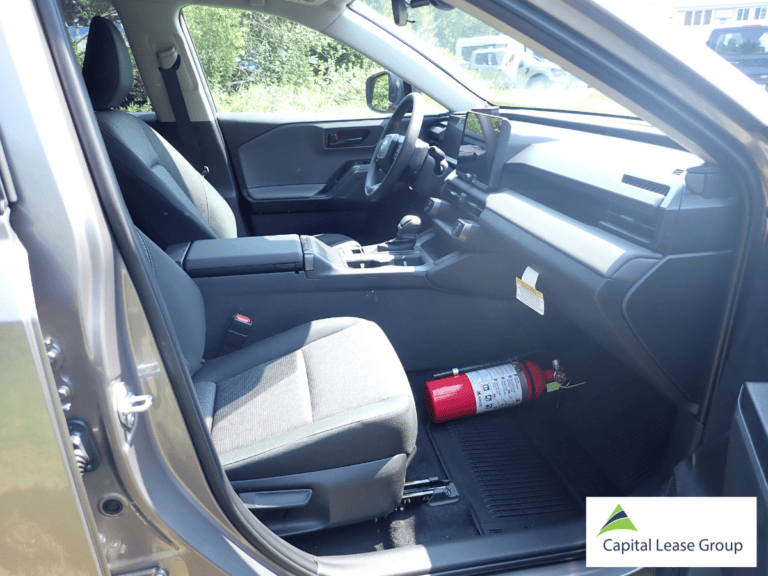
- Mounted 5-lb. fire extinguisher
- Triangle kit
- Child Check-Mate reminder system
- Back-up alarm
These aren’t simply accessories. Massachusetts specifies equipment and operating requirements for vehicles used for 7D pupil transportation, including items such as a child reminder system on 2018-and-newer vehicles, an audible backup alarm, fire extinguisher and additional safety equipment.
The result is a vehicle that retains the familiar passenger-vehicle experience of a RAV4 while being configured specifically for its role transporting students.
A Closer Look at This Toyota RAV4 7D Vehicle
The 7D conversion adds the equipment required for its student transportation role while retaining the familiar size, interior and driving experience of a Toyota RAV4.


7D vs. MFSAB: What’s the Difference?
This is where schools can understandably get confused.
Capital Lease Group supplies both 7D vehicles and Multifunction School Activity Buses (MFSABs), but the two aren’t interchangeable.
One of the biggest distinctions is how the students are being transported.
A Massachusetts 7D vehicle can be used for regular fixed-route pupil transportation — for example, picking students up at home and bringing them to school on a predetermined daily basis.
An MFSAB is designed for a different purpose. It is commonly used by schools, day care programs and other organizations for transportation connected with activities rather than traditional home-to-school fixed routes.
Think field trips, athletics, clubs, enrichment programs and other group transportation needs.
MFSABs also offer greater passenger capacity. Depending on configuration, a small MFSAB can accommodate substantially more passengers than a 7D vehicle while still providing a school-bus-style body and safety construction.
MFSABs can be a great fit for schools that need more passenger capacity for athletics, field trips, clubs and other activities. See how one Massachusetts private school is using an MFSAB for its student transportation needs.
So the question isn’t simply:
“Which vehicle is bigger?”
It is:
“Who are you transporting, how many people are you transporting, and how will the vehicle be used?”
Those answers help determine which vehicle category makes sense.
The Driver Requirements Are Different, Too
The vehicle is only one side of the equation. The person behind the wheel matters as well.
Massachusetts requires someone operating a 7D vehicle for pupil transportation to obtain a 7D School Pupil Transport Certificate.
That is different from simply having an ordinary driver’s license, but it is also different from the licensing generally associated with driving a full-size school bus.
To obtain a 7D certificate, an applicant generally must be at least 21, have held a valid driver’s license continuously for at least three years, meet driving-record requirements, pass CORI and SORI background checks, complete required training, and pass vision, physical and written knowledge requirements.
By comparison, operating a full-size Massachusetts school bus generally requires a CDL with Passenger and School Bus endorsements as well as a school bus driver certificate.
For organizations already struggling to recruit drivers, understanding those distinctions can be an important part of choosing a vehicle.
Sometimes the Right School Vehicle Looks Like an Everyday Vehicle
Not every student transportation need calls for a large bus — or even a van.
This Toyota RAV4 is a good example of how the vehicle can be matched to the job.
For a Massachusetts school or organization transporting a small group of students on a regular route, a properly equipped 7D SUV can offer an interesting combination: the familiarity and maneuverability of an everyday passenger vehicle with the equipment and compliance required for its student transportation role.
And when the transportation need changes — more passengers, activity transportation, wheelchair accessibility or another specialized requirement — an MFSAB or another purpose-built vehicle may be the better fit.
That’s why the first question shouldn’t necessarily be:
“What vehicle should we buy?”
It should be:
“How do you need to transport your students?”
Capital Lease Group can help schools and organizations work through that question and identify a vehicle that fits the passengers, route, driver requirements and day-to-day transportation needs. Please reach out with any questions you might have!
FAQs
What is a 7D vehicle in Massachusetts?
A 7D vehicle is a passenger vehicle used to transport school pupils in Massachusetts under the state’s school pupil transportation requirements. The vehicle can carry no more than eight passengers in addition to the driver and must meet specific vehicle, equipment and safety requirements.
Does a 7D vehicle have to be a van?
No. A 7D vehicle does not have to be a van or minivan. A qualifying passenger vehicle, including an SUV such as a Toyota RAV4, can be equipped for 7D school pupil transportation as long as it meets Massachusetts requirements.
How many students can ride in a 7D vehicle?
A Massachusetts 7D vehicle can carry up to eight passengers in addition to the driver. If a monitor rides in the vehicle, the monitor is counted as one of those eight passengers.
Do you need a CDL to drive a 7D vehicle in Massachusetts?
A CDL is not required simply because a vehicle is a 7D vehicle. However, the driver must meet Massachusetts requirements and obtain a 7D School Pupil Transport Certificate. This includes requirements related to age, driving experience, background checks, training, physical qualifications and testing.
What is the difference between a 7D vehicle and an MFSAB?
The biggest difference is how the vehicle will be used. A 7D vehicle can be used for fixed-route pupil transportation, such as regularly transporting students between home and school. A Multifunction School Activity Bus (MFSAB) is generally used for school-related activities rather than traditional fixed-route home-to-school transportation. Capacity and driver requirements can also differ depending on the vehicle.
Can a school use a Toyota RAV4 as a 7D vehicle?
Yes, provided the particular vehicle meets Massachusetts 7D requirements and is properly equipped and approved for that use. A RAV4 can be an attractive option when a school needs to transport a small number of students and wants a vehicle that is familiar and easy for drivers to operate.
What equipment is added to a 7D vehicle?
The exact requirements depend on the vehicle and applicable Massachusetts regulations. This Toyota RAV4’s 7D package includes a roof-mounted SCHOOL BUS sign with flashing lights, a back-up alarm, Child Check-Mate reminder system, fire extinguisher, first aid kit, seat belt cutter, warning triangles, wheel chocks and other safety equipment.
Is 7D a Massachusetts-only requirement?
7D refers specifically to Massachusetts law and Massachusetts school pupil transportation requirements. Organizations operating in other states need to follow the pupil transportation laws and vehicle requirements that apply in their own state.
What equipment is added to a 7D vehicle?
The exact requirements depend on the vehicle and applicable Massachusetts regulations. This Toyota RAV4’s 7D package includes a roof-mounted SCHOOL BUS sign with flashing lights, a back-up alarm, Child Check-Mate reminder system, fire extinguisher, first aid kit, seat belt cutter, warning triangles, wheel chocks and other safety equipment.
How do I know whether my school needs a 7D vehicle or an MFSAB?
Start with how you plan to use the vehicle, how many students you need to transport and who will be driving it. A small fixed-route student transportation need may point toward a 7D vehicle, while transportation for larger groups and school activities may point toward an MFSAB. Capital Lease Group can help you evaluate the transportation need before deciding which vehicle makes the most sense.