What Massachusetts businesses should know before buying a plow truck
As much as we would love to close our eyes and ears and pretend that it won’t happen, we know for sure that it will snow this winter. So that means we have to prepare now to be able to handle it when it arrives.
If you’re buying a pickup to plow snow, you might assume you can choose the truck first and add the plow afterward.
That can be an expensive assumption.
You can’t necessarily put any snowplow on any pickup truck. The specific truck configuration and the specific plow have to work together. Front and rear axle ratings, overall vehicle weight, cab and engine configuration, factory options, the weight of the plow and anything else you plan to carry can all come into play.
For Massachusetts businesses getting ready for another New England winter, the better approach is to think about the finished work truck before you buy the pickup.
The short answer: Don’t buy the pickup first and assume you’ll find a plow for it later. The truck and snowplow need to be matched using the vehicle’s exact configuration, axle ratings and the plow manufacturer’s approved applications.
It’s Not Enough to Say, “It’s an F-250”
Two Ford F-250s can look almost identical sitting beside each other, but that doesn’t necessarily mean they can take the same plow.
The engine can be different. The cab can be different. The front axle capacity can be different. One may have a factory Snow Plow Prep Package and the other may not.
NTEA – The Work Truck Association has a group devoted specifically to this subject: the Snow Control Equipment Manufacturers Committee (SCEMC). Its guidance recommends following the truck and snowplow manufacturers’ approved applications and staying within the vehicle’s front and rear axle ratings and overall weight limits. It also calls for a weight-distribution analysis when snow-control equipment is installed.
That sounds technical, but the basic message is simple:
You need to choose the truck and the plow together.
Why Does the Front Axle Matter So Much?
A commercial snowplow is a substantial piece of equipment mounted on the front of the truck.
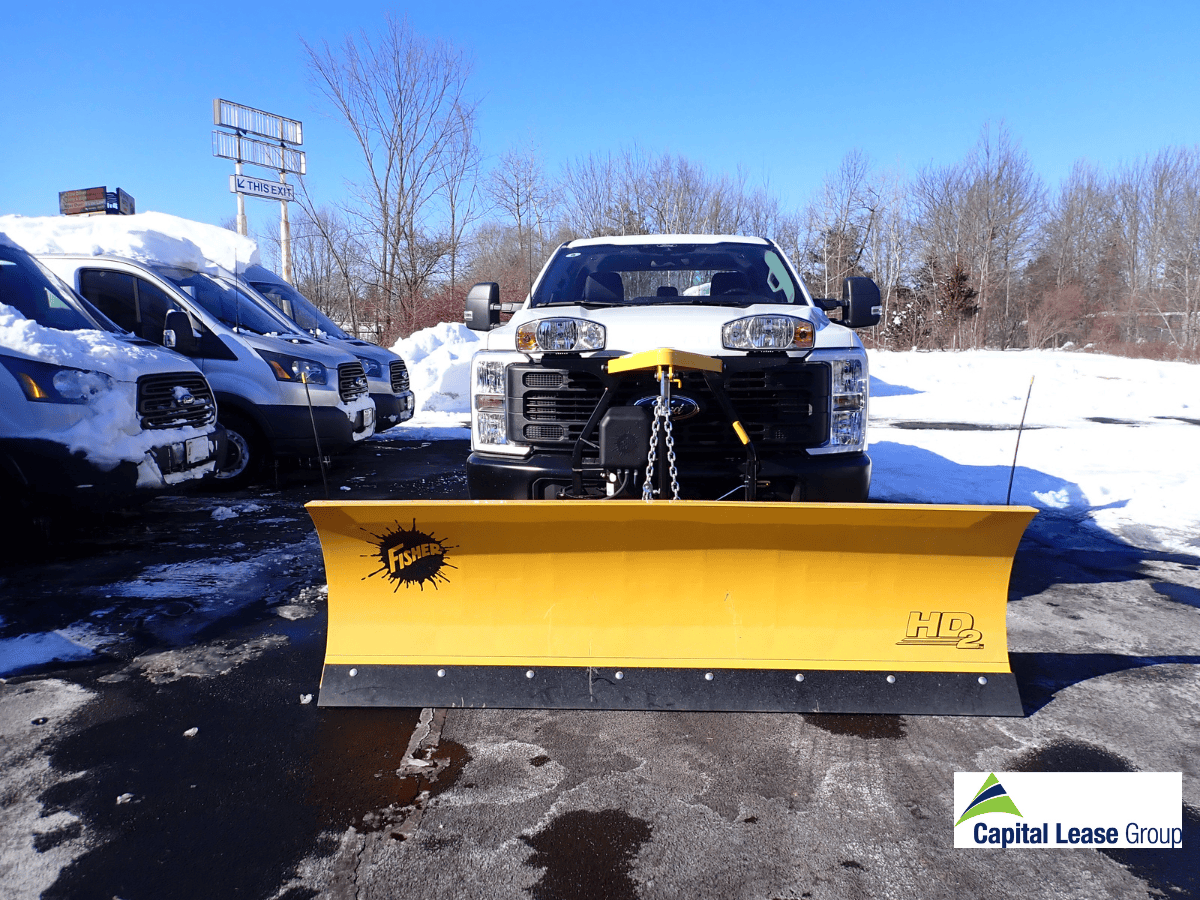
Take the FISHER HD2 as an example. Capital Lease Group previously delivered a Ford F-250 equipped with an HD2 straight-blade plow. FISHER offers the HD2 in several widths for Class 2 and Class 3 trucks, and the manufacturer specifically directs buyers to its eMatch system to determine which plows fit a particular vehicle.
The important part isn’t simply how much weight the truck can carry overall.
The front axle has its own maximum rating.
That’s the Front Gross Axle Weight Rating, often shortened to FGAWR.
So even if the truck appears to have plenty of overall payload available, you still need to make sure the plow isn’t putting too much weight on the front axle.
And remember: you’re not only accounting for the plow.
You also have to consider the driver, passengers, tools, salt or sand, a spreader and other equipment the truck may carry.
What Do GVWR and GAWR Mean?
If you’re shopping for a plow truck, these are two acronyms worth knowing.
GVWR – Gross Vehicle Weight Rating
GVWR sets the maximum allowable loaded weight of the complete vehicle.
GAWR – Gross Axle Weight Rating
GAWR sets the maximum amount of weight that can be carried by an individual axle. The front and rear axles each have their own rating.
You don’t need to become a truck engineer to buy a snowplow truck.
But somebody involved in specifying and upfitting the vehicle needs to make sure the numbers work.
NTEA’s guidance is very clear on this point: the finished vehicle needs to remain within its front axle, rear axle and overall vehicle weight limits.
What Is a Snow Plow Prep Package?
It’s easy to overlook the Snow Plow Prep Package when comparing truck prices.
A Snow Plow Prep Package is a factory option designed to prepare certain truck configurations for snowplow use.
What is included varies by manufacturer and model year, but depending on the vehicle it can involve equipment or specifications related to areas such as:
- front suspension;
- springs;
- electrical capacity;
- alternator output;
- cooling; and
- other components or configurations required for snowplow applications.
And here’s another important point: ordering a Snow Plow Prep Package does not mean every plow suddenly fits the truck.
You still have to match the equipment to that particular vehicle.
A Closer Look at a Recently Delivered F-250 Plow Truck
Here are a few photos of the Ford F-250 with a FISHER HD2 plow delivered by Capital Lease Group.


What About Half-Ton Pickups?
Half-ton pickups need to be evaluated individually.
There are snowplows designed for certain lighter-duty pickups. So it wouldn’t be accurate to say that every plow truck has to be an F-250, Silverado 2500HD, Ram 2500 or another ¾-ton truck.
The question is what you’re asking the truck to do.
There’s a big difference between occasionally clearing a private driveway and spending a Massachusetts snowstorm clearing commercial parking lots, apartment properties or customer sites for hours at a time.
For serious commercial work, heavier-duty trucks are common for good reason.
But again, the badge on the truck is only the starting point.
For more on choosing a plow truck, read our earlier post, Best Pickup Truck for Plowing Snow.
Don’t Forget What’s Going in the Truck Bed
Planning the whole vehicle means accounting for what you’ll carry in the bed, too.
Maybe you’re adding:
- a salt or sand spreader;
- bags or bulk material;
- tools;
- fuel;
- other equipment; or
- additional passengers.
That changes the weight of the completed vehicle and how that weight is distributed between the front and rear axles.
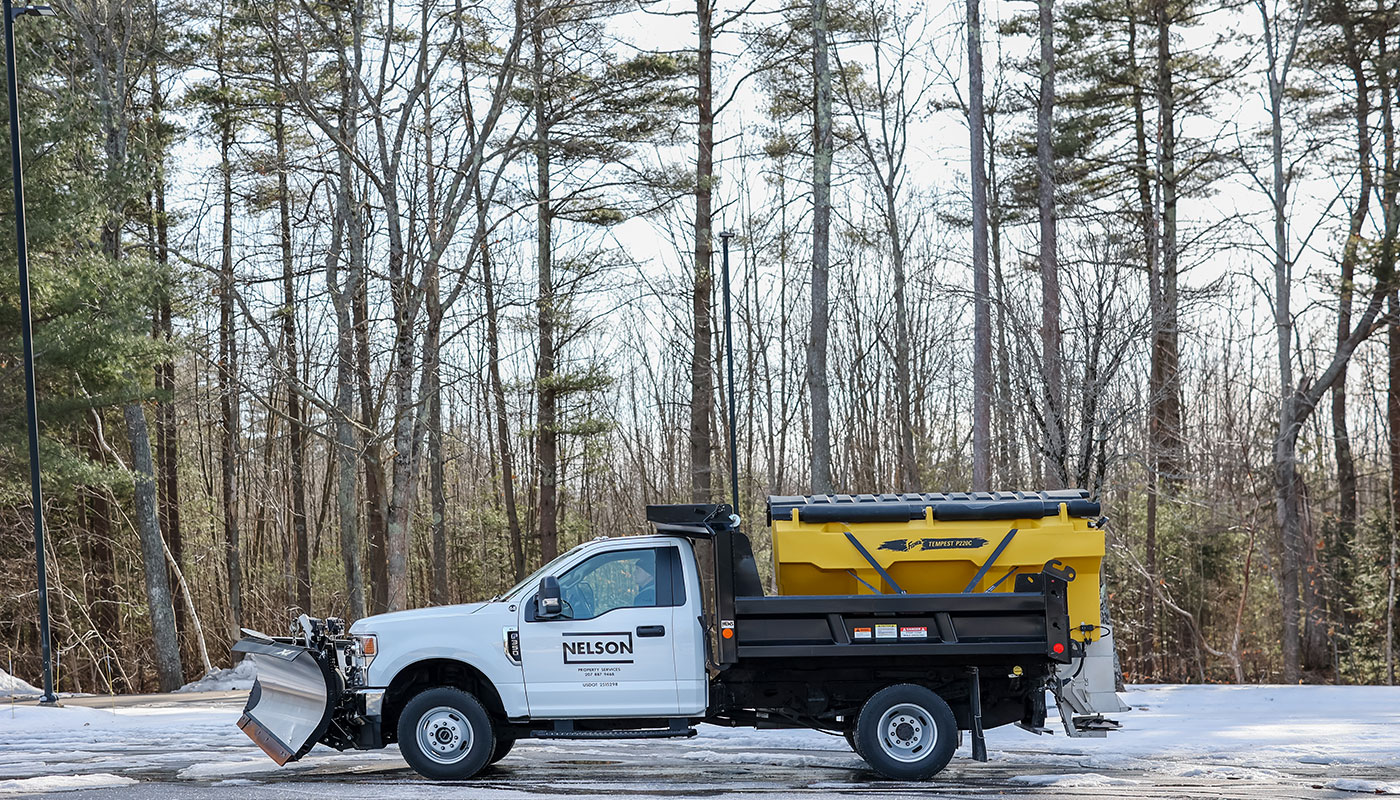
In some truck-and-plow applications, ballast may also be required behind the rear axle to achieve the correct weight distribution.
Snow Is Coming. Now Is the Time to Plan.
Here in Massachusetts, we know what happens. Every year, we enjoy the summer, and then hopefully a beautiful fall. It feels like there is plenty of time before the snow.
Until there isn’t.
If your business needs another plow truck this winter, now is the time to be looking. You may need time to find the right truck, confirm the configuration, source the plow, coordinate the upfit and get the finished vehicle on the road.
Capital Lease Group is based in Brockton, Massachusetts, and we help businesses find, lease and upfit commercial vehicles for the work they actually need to do.
One of the advantages of working with Capital Lease Group is that we are often able to lease you your upfits as well as the vehicle. There’s no need to provide us with a big down payment for the upfit — and in this case, that’s the plow.
We can help you look at the complete vehicle — truck, equipment, upfit and lease — rather than trying to make everything fit afterward.
Frequently Asked Questions About Snowplow Trucks
Can I lease the snowplow along with the truck?
Capital Lease Group can often include the snowplow and other upfits in the vehicle lease, so you don’t need to provide a big down payment for the upfit. Talk to us about the truck and equipment you need, and we can help you explore the available leasing options.
Can you put a snowplow on any pickup truck?
No. A snowplow has to be compatible with the specific truck configuration. Vehicle weight, front and rear axle ratings, factory equipment and the size and weight of the plow all need to be considered.
Can you put a snowplow on a half-ton pickup?
Some half-ton pickups can use snowplows designed for those specific vehicles. Whether a plow is appropriate depends on the exact truck configuration, the manufacturer’s recommendations and the intended use of the truck.
What is a Snow Plow Prep Package?
A Snow Plow Prep Package is a factory option intended to prepare certain vehicle configurations for snowplow use. Depending on the manufacturer, it may include changes or upgrades involving the front suspension, springs, electrical system, alternator, cooling or other equipment.
What does FGAWR mean on a plow truck?
FGAWR stands for Front Gross Axle Weight Rating. It is the maximum allowable weight on the vehicle’s front axle. The front axle rating matters especially on a plow truck because the snowplow adds substantial weight at the front of the vehicle.
Do I need rear ballast with a snowplow?
Some truck-and-plow combinations may require ballast to maintain proper weight distribution. The amount and placement should follow the vehicle and snowplow manufacturers’ specifications.
How do I know which snowplow fits my truck?
Check both the truck manufacturer’s requirements and the snowplow manufacturer’s approved applications. FISHER, for example, offers its eMatch system to identify snowplows suited to a particular vehicle specification.
Should I choose the truck or snowplow first?
Ideally, choose them together. Start with what the completed vehicle needs to do, then make sure the truck, factory configuration, plow and any other equipment are compatible.