
What’s the Best Pickup Truck for a Snow Plow?
A Buyer’s Guide to Engine, Transmission, Fuel, and Maintenance Considerations
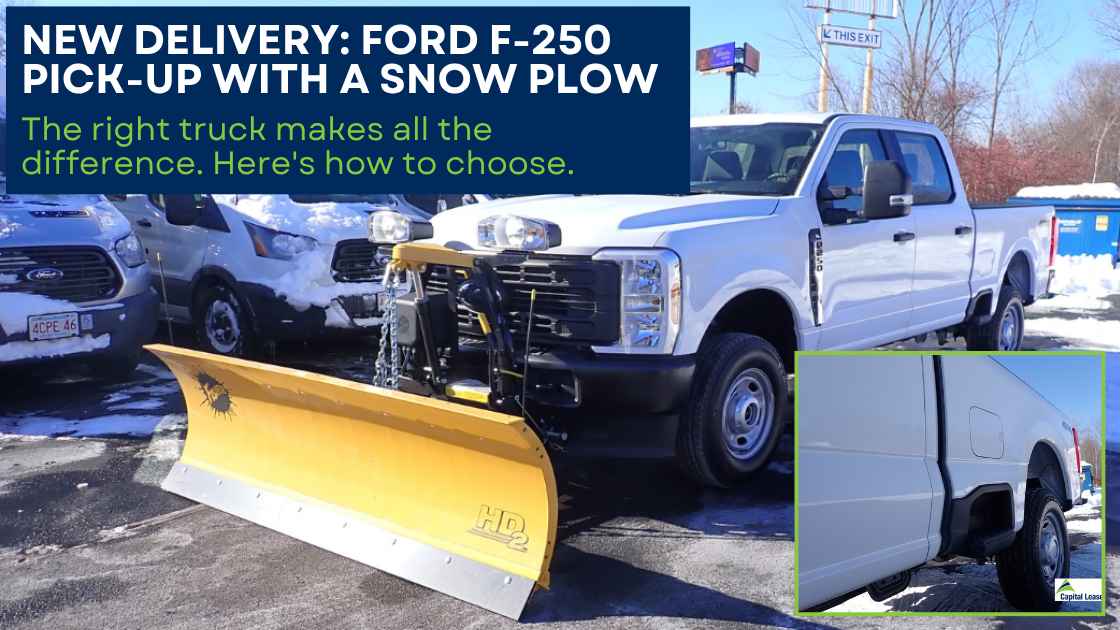
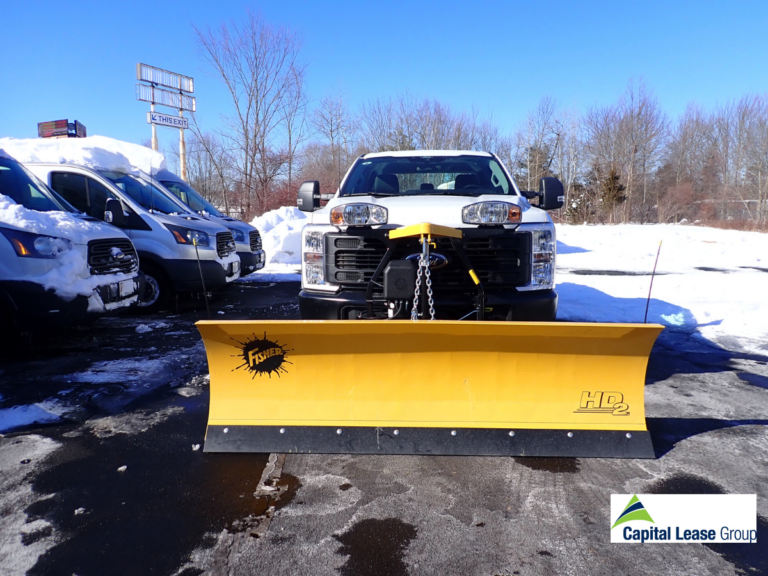
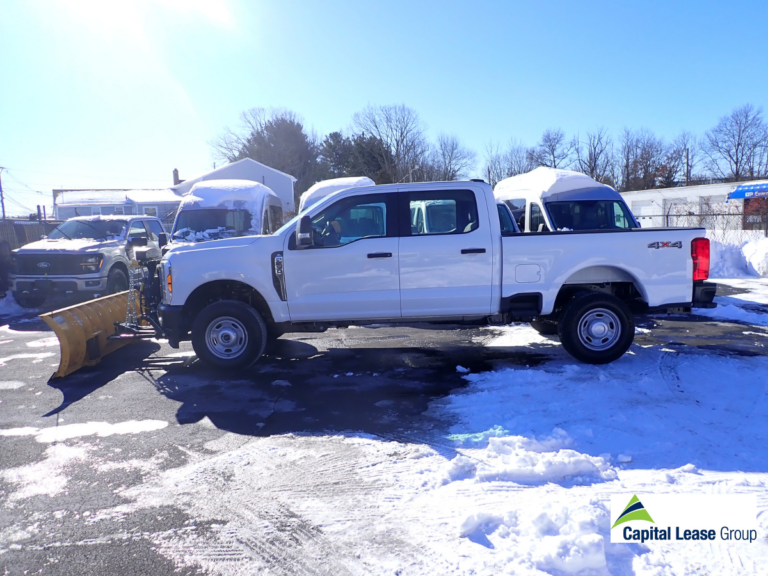
We recently delivered a Ford F-250 pickup equipped with a Fisher HD2 straight-blade plow to one of our customers. It’s a combination we see often—and for good reason. The F-250 is built to handle plow duty, and the Fisher HD2 is one of the most trusted commercial straight blades on the market, with a rugged 29-inch steel moldboard reinforced by ten vertical ribs for serious structural strength.
But not every truck is the right truck for a plow. As someone who once tried to plow with a Chevy 1500, I learned the hard way that a half-ton pickup is really only meant for light dustings of snow. That truck didn’t hold up. The front end wore out fast, the transmission ran hot, and the maintenance bills stacked up in a hurry.
If you’re the person leasing the plow truck—not necessarily the one driving it—this guide covers what you need to know to make a smart decision: which truck class to choose, gas vs. diesel, what plowing does to the drivetrain, and how to budget for fuel and maintenance.


Start With the Right Truck Class: Why ¾-Ton and Up Is the Standard
The industry consensus is clear: three-quarter-ton trucks (2500 series) and one-ton trucks (3500 series) are the recommended platforms for snow plowing. The Ford F-250 and F-350, Chevy Silverado 2500HD and 3500HD, GMC Sierra 2500HD and 3500HD, and Ram 2500 and 3500 are all proven performers in this category.
These trucks are built with reinforced frames, heavier-duty suspension systems, and higher front gross axle weight ratings (FGAWR) that allow them to safely carry the 400–900+ pounds a commercial snow plow adds to the front end. They also come with larger brakes, stronger steering components, and transmissions designed to handle the constant forward-reverse cycling that plowing demands.
Fisher Engineering’s eMatch vehicle compatibility tool (fisherplows.com/match) is an excellent resource for confirming which plows are approved for your specific truck. You enter your vehicle’s make, model, year, and configuration, and eMatch tells you exactly which Fisher plows are compatible based on Fisher Engineering’s guidelines and Federal Motor Vehicle Safety Standards. If your vehicle doesn’t appear in eMatch, it doesn’t have an approved plow application—which is a clear signal to consider a different truck.
Gas vs. Diesel: It’s Not as Simple as You’d Think
This is one of the most debated topics in the plowing world, and the answer might surprise you: for many plow applications, a gas engine is actually the better choice.
The weight factor
A diesel engine is significantly heavier than its gas counterpart. In a comparison from Boss Snowplow, the same Dodge 2500 Crew Cab/long box with a 6.7L diesel weighed 780 pounds more on the front axle than the identical truck with the 5.7L gas engine. That’s 780 fewer pounds of capacity available for your plow. Since a truck’s ability to carry a plow is determined by subtracting its front curb weight from its FGAWR, a heavier diesel engine directly reduces the size and weight of plow you can safely mount.
This is why many professional plow operators—especially those doing residential and mixed-use work—prefer gas engines. A lighter engine means more flexibility when choosing plow size and better handling characteristics with the plow mounted.
When diesel makes sense
Diesel shines when you’re running a one-ton truck doing heavy commercial plowing with a salt spreader, or when the truck doubles as a towing vehicle for the rest of the year. Diesel engines produce more torque at low RPMs, offer better fuel economy during non-plowing use, and generally have a longer engine lifespan. However, diesel trucks come with higher purchase prices, higher fuel costs per gallon, and more expensive maintenance (especially with modern emissions systems like DPF filters).
The Ford F-250 with the 6.2L or 7.3L gas V8 paired with a Snow Plow Prep Package supports a best-in-class 1,400-pound maximum snow plow rating including mounting hardware. The diesel Super Duty supports 1,290 pounds—still excellent, but slightly less due to the heavier engine.
Transmission: The Component That Takes the Biggest Hit
If there’s one thing every experienced plow operator will tell you, it’s this: plowing is the hardest work a transmission will ever do. The constant shifting between drive and reverse, pushing thousands of pounds of snow, and operating at low speeds under high load generates enormous heat—and heat is what kills transmissions.
What buyers should look for:
- Transmission oil cooler: This is non-negotiable. Most Snow Plow Prep Packages include one. If buying a truck without a factory plow package, adding an aftermarket transmission cooler is essential.
- Automatic vs. manual: Modern automatic transmissions with proper cooling are the standard for plowing today. The key is ensuring the vehicle comes to a complete stop before shifting between forward and reverse—rapid direction changes while still rolling will destroy clutch packs and bands faster than anything else.
- Avoid overdrive while plowing: Operating in overdrive during plowing puts unnecessary strain on the transmission. Many experienced operators plow in 4-Low for heavy snow, which increases line pressure and helps prevent internal slippage.
- Fluid change intervals: Plan to change transmission fluid at more frequent intervals than the manufacturer’s standard schedule. Plowing is classified as “severe duty” use by every vehicle manufacturer.
The Snow Plow Prep Package: Why It Matters
Major truck manufacturers offer factory Snow Plow Prep Packages, and ordering a truck with one is strongly recommended. These packages typically include a higher-output alternator (170 amps or more), a wiring harness for plow controls, a high-capacity transmission oil cooler, heavy-duty front suspension springs or upgraded shock absorbers, and in some cases, a skid plate and high-flow front bumper.
Ford’s Super Duty Snow Plow Prep Package, Chevy’s Snow Plow Prep Package for the Silverado 2500HD/3500HD, and GMC’s Sierra Plow Package are all excellent options. These packages are relatively inexpensive when added at the factory—often under $400—and they save thousands in potential repairs down the road.
Fuel Consumption: What to Budget For
Plowing is fuel-intensive work. While a ¾-ton gas truck might average 12–14 MPG in normal driving, that number drops significantly once a plow is mounted and the truck is working.
Real-world fuel consumption during plowing:
- Gas ¾-ton trucks: Typically consume 2–4 gallons per hour while actively plowing, which translates to roughly 4–9 MPG depending on conditions.
- Diesel ¾-ton trucks: Generally more efficient at 1–2.5 gallons per hour during plowing, or about 8–13 MPG.
- Driving with the plow mounted but not actively plowing: Expect a 15–25% drop in fuel economy compared to driving without the plow. The added weight, wind resistance, and 4WD use all contribute.
Research from the University of Minnesota’s Center for Transportation Studies found that on days with four inches of snow or more, snowplow fuel consumption rose 25% compared to dry-road operation. Factors like cold temperatures increasing aerodynamic drag, thicker engine fluids, and 4WD engagement all compound the effect.
Buyer’s tip: Remove the plow between snow events. Carrying 400–900 extra pounds on the front end when you don’t need it wastes fuel every mile. The Fisher HD2’s Minute Mount® 2 system makes this easy—one person can detach and reattach the plow in minutes.
4WD Is a Must—But It Comes at a Cost
Four-wheel drive is essential for plowing. Snow and slush can reduce traction by as much as 40%, and the added weight of a plow on the front axle can actually reduce rear-wheel traction, making 4WD critical for maintaining control. However, 4WD does consume more fuel and adds wear to transfer cases, front differentials, and CV joints. These components should be inspected regularly on any plow truck.
Maintenance Realities: What Plowing Does to a Truck
Plowing is classified as severe-duty use, and it accelerates wear on virtually every major system. Smart buyers budget for this upfront rather than being surprised by it later. Here’s what to expect:
Front-end components
Tie rods, ball joints, wheel bearings, and steering components wear faster when carrying a plow. On a properly spec’d ¾-ton or one-ton truck, you can typically go 3–5 years between front-end rebuilds. On a half-ton, experienced operators report needing annual front-end work costing $600–$1,200.
Brakes
Brake pads and rotors wear significantly faster during plowing due to the extra weight and constant speed changes. Inspect brakes before and after each plow season at minimum.
Corrosion and rust
Road salt is highly corrosive and will attack brake lines, fuel lines, transmission cooler lines, frame rails, and electrical connections. Brake, fuel, and transmission lines are particularly vulnerable on pickup plow trucks, and line failures often happen at the worst time—mid-storm. Undercoating, regular washing (including the undercarriage), and proactive line inspection are essential.
Electrical system
Plowing demands more from the electrical system than normal driving. The plow’s hydraulics, lights, heated mirrors, defrosters, and cab heater all draw power simultaneously. A high-output alternator (included in most plow prep packages) is critical. Batteries should be tested before each season. Fisher’s FLEET FLEX system helps by minimizing electrical intrusion during installation and isolating the plow’s electrical system from the vehicle’s—preventing potential damage from a shorted circuit.
Fluids
Engine oil, transmission fluid, hydraulic fluid, coolant, and differential fluid should all be changed on a more aggressive schedule for plow trucks. Cold temperatures thicken fluids and increase internal friction, while the heavy-duty cycling of plowing accelerates fluid breakdown.
What to Look for When Purchasing a Plow Truck
If you’re buying or leasing a truck specifically for plow duty, here’s a quick checklist of what to prioritize:
- Truck class: ¾-ton (2500) minimum; one-ton (3500) for heavy commercial use
- Engine: Gas for most plow applications (lighter weight = larger plow capacity); diesel if also towing year-round
- Drivetrain: 4WD, no exceptions
- Snow Plow Prep Package: Factory-installed preferred; includes upgraded alternator, wiring, transmission cooler, and suspension
- Plow compatibility: Use Fisher’s eMatch tool at fisherplows.com/match to confirm which plows are approved for your exact truck configuration
- Cab configuration: Regular cab or short-wheelbase models are more maneuverable for plowing; crew cabs work but require more space to turn
- FGAWR: Check the truck’s front gross axle weight rating on the driver’s door sticker and confirm it can support your intended plow
- Wheelbase: Shorter is generally better for maneuverability; longer wheelbases can get stuck in tight driveways
Ready to Lease a Plow-Ready Truck?
At Capital Lease Group, we specialize in getting you the right work vehicle for the job. Whether you need a Ford F-250 with a Fisher HD2 like the one we just delivered, or a heavier-duty setup for commercial snow removal contracts, we can help you spec and lease the right truck. Contact us today to talk about your winter fleet needs.
Frequently Asked Questions
What size truck do I need for a snow plow?
A ¾-ton (2500 series) pickup is the minimum recommended size for regular or commercial snow plowing. Models like the Ford F-250, Chevy Silverado 2500HD, and Ram 2500 are built with reinforced frames, heavy-duty suspension, and the front axle capacity to safely carry commercial plows like the Fisher HD2. Half-ton (1500) trucks can handle lightweight plows for occasional driveway use, but they wear out much faster under plow duty.
Is a gas or diesel truck better for plowing snow?
For most plowing applications, a gas engine is actually preferred. Diesel engines are significantly heavier—up to 780 pounds more on the front axle in some models—which reduces the weight of plow you can safely mount. Gas engines allow for larger, heavier plows and better front-end handling. Diesel is better suited for trucks that also tow heavy loads year-round or run commercial salt spreaders.
How much gas does a plow truck use per hour?
A gas-powered ¾-ton truck typically burns 2–4 gallons per hour while actively plowing, depending on snow conditions. Diesel trucks are more efficient at roughly 1–2.5 gallons per hour. These figures vary based on snow depth, snow weight (wet vs. dry), lot size, and how much time is spent pushing vs. repositioning.
What does plowing do to a truck’s transmission?
Snow plowing is one of the hardest activities a transmission can perform. The constant shifting between drive and reverse under heavy load generates significant heat, which degrades transmission fluid and wears internal components. Using a transmission oil cooler, allowing the truck to fully stop before shifting directions, avoiding overdrive, and changing fluid on an accelerated schedule all help extend transmission life.
Will a snow plow damage my truck?
Plowing accelerates wear on several systems, but it won’t destroy a truck that’s properly spec’d and maintained. Expect faster wear on front-end components (tie rods, ball joints, wheel bearings), brakes, and the transmission. Corrosion from road salt is also a major concern. Proper maintenance, the right truck class, and smart plowing technique are the keys to longevity.
What is a snow plow prep package and do I need one?
A Snow Plow Prep Package is a factory-installed option that includes upgrades specifically for plow use: a higher-output alternator, wiring harness for plow controls, transmission oil cooler, and heavy-duty front suspension. They typically cost under $400 when ordered with the truck and can save thousands in avoided repairs. If you’re buying a truck for plowing, it’s strongly recommended.
What is FGAWR and why does it matter for plowing?
FGAWR stands for Front Gross Axle Weight Rating—it’s the maximum weight your truck’s front axle is designed to handle. To determine if your truck can safely carry a plow, subtract the front curb weight from the FGAWR. The remaining capacity must accommodate the plow’s weight. Exceeding FGAWR can cause steering problems, brake failure, and accelerated wear on tires and suspension.
Can I plow with a half-ton truck like a Chevy 1500 or Ford F-150?
You can, but with significant limitations. Half-ton trucks are suitable for light residential plowing—your own driveway or a few neighbors’. For any regular or commercial plowing, a half-ton will experience accelerated front-end wear, faster brake deterioration, and higher transmission failure rates. Several manufacturers’ owner’s manuals explicitly warn against plow use on 1500-series trucks, and warranties may not cover plow-related damage.
How do I find out which snow plow fits my truck?
Fisher Engineering offers a free online tool called eMatch at fisherplows.com/match. Enter your vehicle’s make, model, year, and configuration, and eMatch will show you exactly which Fisher plows are approved for your truck. If your vehicle isn’t listed, it doesn’t have an approved plow application based on Fisher’s guidelines and Federal Motor Vehicle Safety Standards.
What is the Fisher HD2 snow plow?
The Fisher HD2 is a commercial-grade straight-blade plow designed for ¾-ton and one-ton 4WD trucks. It features a 29-inch steel blade reinforced with ten vertical ribs, Fisher’s trip-edge design, the Minute Mount® 2 quick-attach system, and the FLEET FLEX universal electrical system. It’s available in 7’6”, 8’, 8’6”, and 9’ widths and is one of Fisher’s best-selling plows.
Should I remove the snow plow when I’m not plowing?
Yes. Carrying the plow between snow events wastes fuel, adds unnecessary wear to front-end components and brakes, and reduces handling quality. The Fisher HD2’s Minute Mount® 2 system allows one person to remove and reinstall the plow in minutes. Removing the plow also reduces corrosion exposure.