Delivered: An Accessible Chrysler Minivan Builtfor Daily Human Services Transportation
Delivered: An Accessible Chrysler Minivan Built for Daily Human Services Transportation
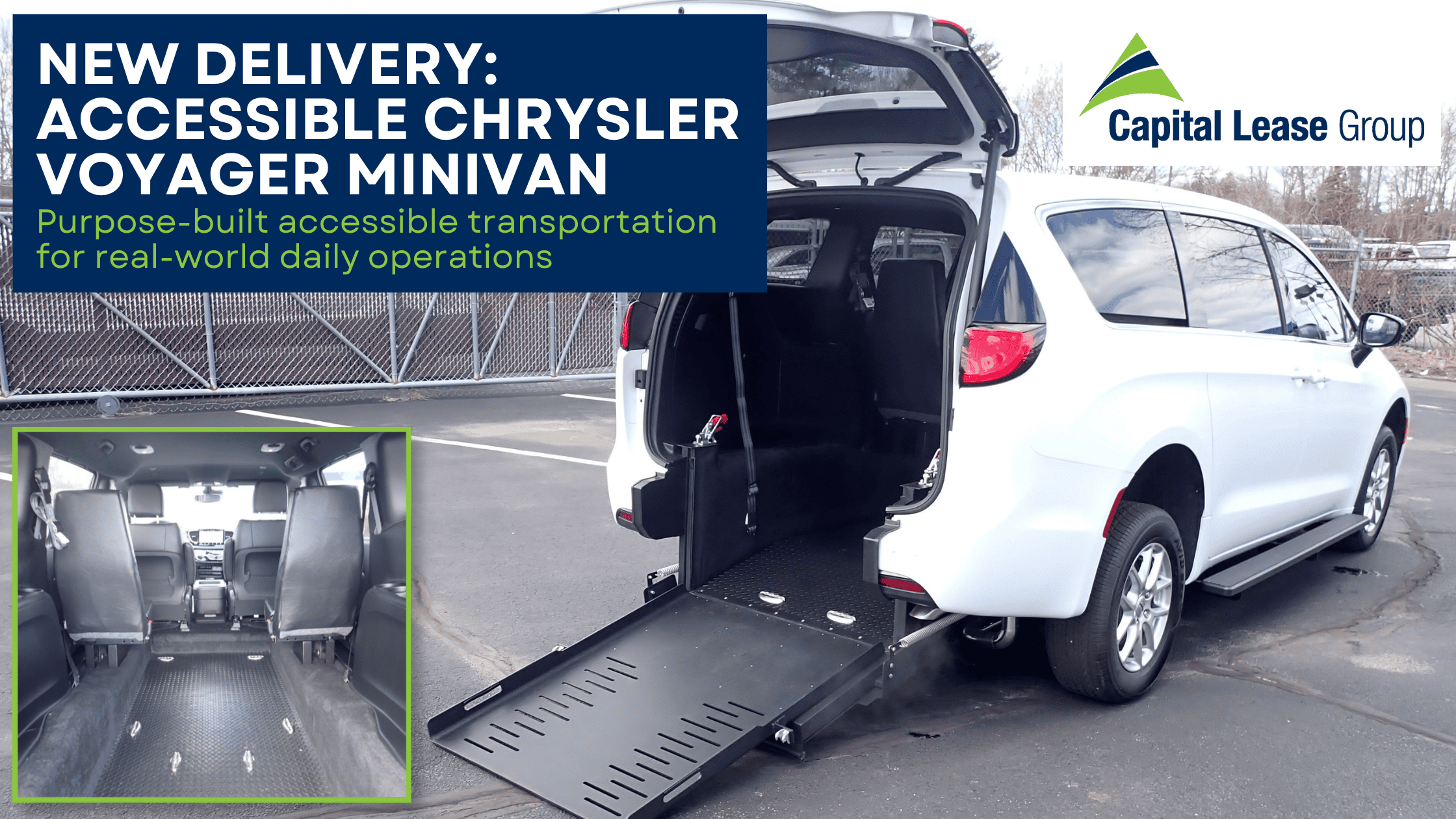
The rear-entry ramp is lightweight and spring-assisted, providing smooth access through a wide entry point that fits a range of wheelchair sizes.
Because the ramp deploys from the rear, the van doesn’t need extra clearance on the side — an advantage in tight driveways and parking lots.
The ramp is surprisingly easy to deploy. It’s a lightweight, spring-assisted design, so staff don’t have to struggle with a heavy manual ramp or rely on electric motors.
Even with the ramp stowed, the rear-entry system stays compact and unobtrusive, maintaining a clean, factory-style appearance for normal day-to-day driving.
The interior keeps four standard seats — driver, front passenger, and two rear captain’s chairs — with dedicated space for a wheelchair passenger to ride alongside companions rather than separated from them.
The conversion doesn’t change how it drives. Acceleration, handling, and ride quality are the same as a standard Chrysler Voyager.
At Capital Lease Group, we work with organizations to deliver vehicles that match how they actually operate day to day. This month, we delivered a newly upfitted Chrysler Voyager rear-entry accessible minivan to a human services organization that will use it for daily passenger transportation.
The vehicle is designed to safely and comfortably move people of all abilities — every day, on real routes, in real conditions.
Built for the Way People Actually Travel
For a human services organization running daily routes, a vehicle has to do three things well: accommodate riders with different mobility needs, hold up under heavy use, and stay easy for any driver on staff to operate. This Chrysler Voyager conversion is built around those priorities.
Key Exterior Features
The rear-entry ramp is lightweight and spring-assisted, providing smooth access through a wide entry point that fits a range of wheelchair sizes. Because the ramp deploys from the rear, the van doesn’t need extra clearance on the side — a real advantage in tight driveways, residential pickups, and busy parking lots.
Key Interior Features
The vehicle includes a full securement system. The components are on board and ready to be installed for safe, compliant wheelchair transport.
The interior keeps four standard seats — driver, front passenger, and two rear captain’s chairs — with dedicated space for a wheelchair passenger to ride alongside companions rather than separated from them. For daily human services use, that companion seating layout matters: it supports conversation, comfort, and the relationships that often define quality of care.
Non-slip flooring, corrosion-resistant components, and a simplified ramp mechanism are all chosen with long-term reliability and lower maintenance costs in mind.
Why Daily Drivers Appreciate This Setup
One of the most important things to know about this vehicle: the conversion doesn’t change how it drives. Acceleration, handling, and ride quality are the same as a standard Chrysler Voyager. Bumps in the road feel the same. Any driver who can operate a typical minivan can operate this one — no special training curve, no surprises.
That matters for a human services organization where multiple staff members may rotate behind the wheel.
Designed for Everyday Passenger Transportation
This rear-entry accessible minivan was built for real-world daily transportation. For example, it works well for healthcare organizations, schools, senior transportation programs, and community services.
The rear-entry configuration also makes loading and unloading easier in tighter pickup locations because the ramp deploys from the rear instead of the side.
Lightweight Ramp Design
People often assume wheelchair ramps are heavy or difficult to use. However, this ramp is lightweight and spring-assisted, making deployment and closing much easier than expected.
Even when the ramp is stowed, the rear-entry system stays compact and unobtrusive, maintaining a clean, factory-style appearance for everyday driving.
A Smarter Fleet Investment
This delivery reflects how we approach every project at Capital Lease Group: matching vehicle design to daily routes, prioritizing uptime and ease of use, and supporting long-term budget predictability.
If your organization is exploring accessible transportation, we’d be glad to help you evaluate the right fit — from vehicle selection to upfit and full lifecycle support. Simply contact us.
FAQs
_blank
Does a wheelchair-accessible Chrysler Voyager drive differently?
Not really. One of the biggest surprises for people is how normal it feels to drive. The acceleration, ride quality, and handling are all very similar to a standard Chrysler Voyager. The conversion doesn’t take away from the original driving experience.
How many passengers fit in this accessible minivan?
This setup includes four standard seats — driver, front passenger, and two rear captain’s chairs — plus dedicated wheelchair space.
Can wheelchair passengers ride with everyone else?
Yes. The layout allows wheelchair passengers to travel alongside companions instead of being separated from the rest of the group.
What is a rear-entry wheelchair van?
A rear-entry wheelchair van has a ramp that deploys from the back of the vehicle instead of the side. This setup is popular for organizations doing daily transportation because it works well in tighter parking lots and pickup areas.
Why choose a rear-entry accessible van instead of a side-entry van?
Rear-entry vans are often simpler and more practical for fleet use. They don’t require extra room beside the vehicle for ramp deployment, which makes loading and unloading easier in busy or tight locations.
Can Capital Lease Group help with other accessible transportation vehicles?
Absolutely. We help organizations source and structure accessible transportation solutions based on their operational needs, including minivans, shuttle buses, and other specialty vehicles.
_blank
On a very high level, the five phases are listed below, but chapters could be written detailing the make-up of each phase. When all are done properly, your fleet will operate like a well-oiled machine, getting the most out of it at the lowest overall expense.
The five phases are:
Planning/Preparation
Acquisition
Financing
Useful Life Support
Disposition
Is the Q’Straint securement system included?
Yes. The van comes with the Q’Straint securement system. In this case, the components were still in the box at delivery and ready for installation.
What organizations use accessible minivans like this?
Human services organizations, healthcare providers, adult day programs, schools, senior transportation services, and community organizations commonly use vehicles like this for daily passenger transportation.
Are wheelchair-accessible minivans good for fleet use?
They can be an excellent fit for fleets because they combine accessibility with the familiar operation, maintenance, and fuel efficiency of a standard minivan platform.
Is a Chrysler Voyager a good platform for wheelchair conversions?
Yes. The Chrysler Voyager platform is widely used because it offers a comfortable ride, dependable performance, and familiar drivability for staff and drivers.
Is this type of accessible van difficult to maintain?
Not typically. These vehicles are designed for regular daily use with durable interiors and straightforward ramp systems built for long-term reliability.
Is the wheelchair ramp heavy or difficult to use?
Not really. The ramp is designed to be lightweight and spring-assisted, so most people are surprised by how easy it is to deploy and close. Staff do not have to struggle with a heavy manual ramp or rely on electric motors, which also helps reduce maintenance and downtime.