The Vehicle Price Tag Doesn’t Tell the Whole Story
When most people think “budget,” they think sticker price. But in fleet management, that’s only part of the picture. The real costs happen after delivery — in maintenance, insurance, downtime, and resale.
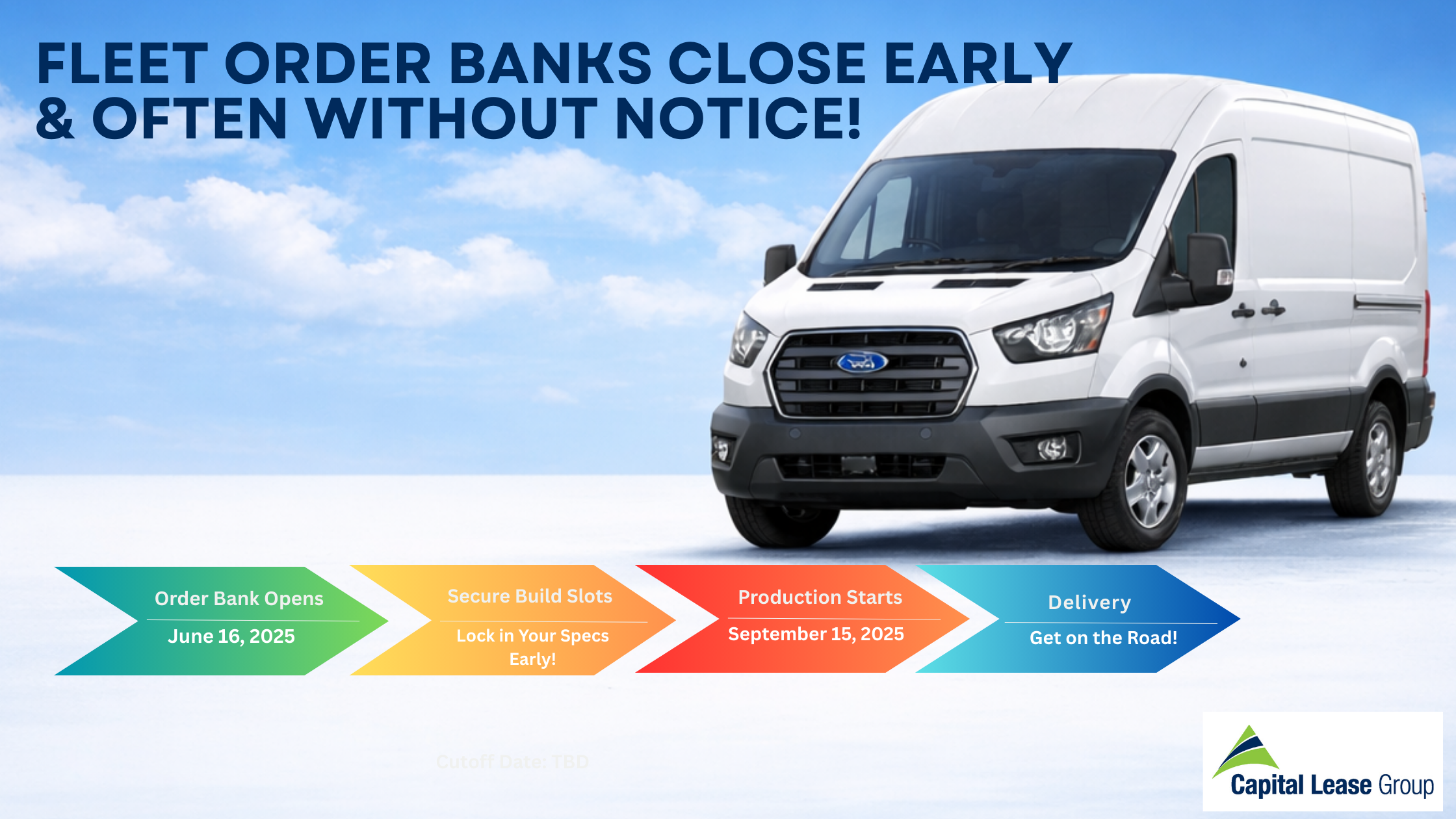
And “after delivery” is the key phrase: even with supply chains improving, the industry is still budgeting around 15–20 week order-to-delivery timelines in 2026. That creates real TCO ripple effects — more rentals, more downtime exposure, and more pressure to plan ahead. (Source: Automotive Fleet — “Fleet Outlook 2026: Why TCO Is the Defining Battle”)
To manage a fleet profitably, you need to budget for total cost of ownership (TCO) — the full cost of operating each vehicle across its lifecycle.
At Capital Lease Group, we help organizations look beyond the upfront cost to see the true financial impact of every fleet decision.
What’s included in TCO?
Understanding TCO means tracking both visible and hidden costs:
Acquisition costs: Purchase or lease price, fees, upfits, and delivery.
Don’t forget to consider availability & lead times including order-to-delivery timing, interim rentals, and the operational cost of waiting (especially when lead times stretch into the 15–20 week range)
Operating costs: Fuel, maintenance, repairs, and insurance.
In 2026 it is important to recognize maintenance inflation. Maintenance cost inflation continues to outpace general inflation, driven by technician shortages, labor rates, and parts pricing pressure.
Insurance + claims risk costs: Fleets have seen double-digit insurance premium increases over the past several years, and collision rates have increased (including a notable rise tied to minor / last-mile incidents).
Downtime: Lost productivity when vehicles are in the shop or unavailable. Capital Lease Group offers loaner vehicles to all our customers who take part in the Full Maintenance Program, and we offer wheelchair accessible vehicles for those who need it.
Depreciation and resale: The largest single expense in most fleets — and one you can influence through smart timing.
Used-vehicle values are expected to see a modest lift by the end of 2026 — which makes disciplined cycling and speed-to-market even more important when you do sell.
Financing and interest: How your funding structure affects total expense. Leasing can be a smart way to protect cash flow while keeping your fleet current. Instead of tying up capital in vehicles, you spread costs over time and can align payments with the way your organization operates. For many fleets, that added predictability supports better budgeting and replacement planning.
Budget uncertainty buffer: Many fleets are building a 10–14% contingency into 2026 budgets to protect against inflation and tariff-driven cost swings.
Data costs & opportunity: With most new vehicles now equipped with OEM-embedded telematics, the differentiator is how well you integrate and use that data to reduce accidents, downtime, and waste.
When you account for all of these, you can make strategic choices that lower total cost over time — not just in year one.
The Power of Fleet Vehicle Lifecycle Budgeting
Lifecycle budgeting replaces reactive spending with predictable planning.
It allows you to:
- Forecast future replacement needs
- Smooth out annual expenses
- Take advantage of manufacturer incentives
- Time sales and purchases for maximum value
It also helps you “stress test” the big cost categories that are shaping 2026: elevated vehicle prices, maintenance inflation, and insurance pressure.
A fleet that budgets for TCO isn’t just saving money — it’s creating long-term financial stability.
How to Budgeting for Fleet Total Cost of Ownership
- Gather real data: Maintenance, fuel, and downtime by vehicle. Include safety + insurance claims data: Track preventable incidents and the downstream cost impact (repairs, downtime, insurance)
- Benchmark by vehicle type: Compare costs against similar units or fleet averages.
- Project 3–5 years ahead: Factor in replacement cycles, interest rates, and depreciation.
- Build flexibility: Keep reserve funds for unexpected repairs or delays. Tip for 2026: consider budgeting a dedicated contingency line (often 10–14%) to cover cost volatility tied to inflation and tariff uncertainty.
Your goal: a rolling, data-driven budget that keeps your fleet predictable, efficient, and ready for the future.
Build a Smarter Fleet Budget
Fleet management is as much about numbers as it is about vehicles. The more accurately you see your total cost of ownership, the better decisions you can make about timing, replacement, and financing.
Schedule a short consultation to review your fleet’s cost breakdown and build a smarter budget. [Schedule a Fleet Planning Call]
 Download our free guide: 7 Key Elements to Smarter Fleet Planning